2026-11-14 · Mark Reynolds
How To Dry Out A Flooded Basement After Dallas Spring Rains
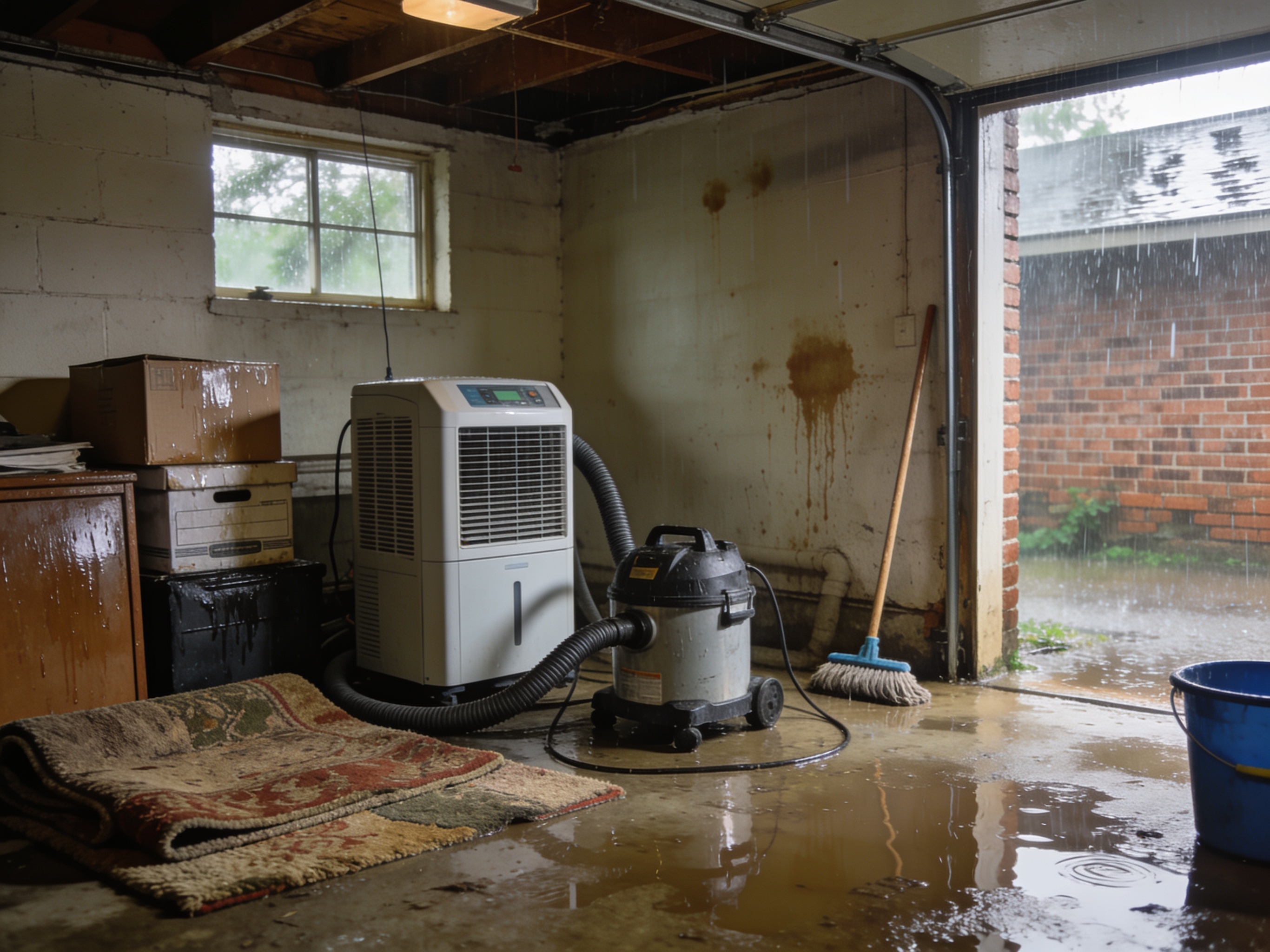
After Dallas spring rains, drying a flooded basement starts with removing standing water within the first 24-48 hours, followed by 3-5 days of targeted airflow and dehumidification to bring moisture levels below 50 percent in concrete and framing.
Initial Safety and Assessment
Dallas homes built before 1970 in areas such as Deep Ellum and Bishop Arts District often have partial basements with clay-heavy soil that retains moisture long after rains stop. Begin by shutting off power at the panel and using a voltage tester before entering. Check for structural cracks along the foundation walls, especially where water entered near the Trinity River floodplain. Document water depth with photos and note any sewage odor, which indicates the need for professional containment. In Uptown Dallas and Lake Highlands, slab-on-grade homes rarely have true basements, but those that do sit lower than street grade and collect runoff quickly during the humid subtropical pattern of afternoon thunderstorms.
Water Extraction and Removal
Use a submersible pump rated for at least 2,000 gallons per hour to clear standing water down to one-quarter inch, then switch to a wet vac for the remainder. In North Dallas and Lake Highlands, where spring rains coincide with high water tables, expect groundwater to seep back in for several hours; repeat pumping every two hours until inflow stops. Place extraction hoses to discharge at least 20 feet from the foundation to avoid re-soaking the soil. Remove and discard saturated insulation, carpet padding, and drywall up to 18 inches above the water line. Homeowners in Downtown Dallas and Oak Lawn frequently find that built-in shelving and finished walls trap hidden moisture behind the studs.
Drying and Dehumidification Process
Position commercial air movers at a 45-degree angle against each wall and run them continuously for the first 72 hours while maintaining indoor temperature between 70 and 75 degrees. Pair the fans with a 70-pint-per-day dehumidifier sized for the square footage; in larger East Dallas basements, two units may be required. Monitor relative humidity hourly with a digital meter until readings stabilize below 45 percent. Dallas mild winters allow this process year-round, but the high humidity that follows spring storms slows evaporation compared with drier climates in nearby Fort Worth or Arlington. Check behind appliances and in corners every 12 hours, moving equipment as needed.
Preventing Mold and Secondary Damage
Apply an antimicrobial solution to exposed concrete and framing once surfaces are dry to the touch, then run the dehumidifier another 48 hours. In homes near Klyde Warren Park or the Dallas Museum of Art, where older construction meets modern landscaping, poor grading often directs water toward basement windows; re-grade soil to slope away from the foundation at least six inches over ten feet. Replace any wet insulation with closed-cell foam board to reduce future absorption. Watch for musty odors returning within two weeks, a common sign that moisture remains trapped in Dallas clay soils.
When to Call Professionals
If water depth exceeds 12 inches, sewage is present, or the home sits in a known flood zone near the Trinity River, contact a Water Damage Restoration team immediately. Persistent high humidity after five days of drying or visible mold growth on joists also requires specialized equipment and containment. For residents in Plano, Arlington, or other nearby cities who need support outside standard business hours, the same local crews handle overflow work. Read more on river-adjacent risks in Local Considerations For Water Damage In Dallas Homes Near The Trinity River.