2026-11-14 · Mark Reynolds
Local Considerations For Water Damage In Dallas Homes Near The Trinity River
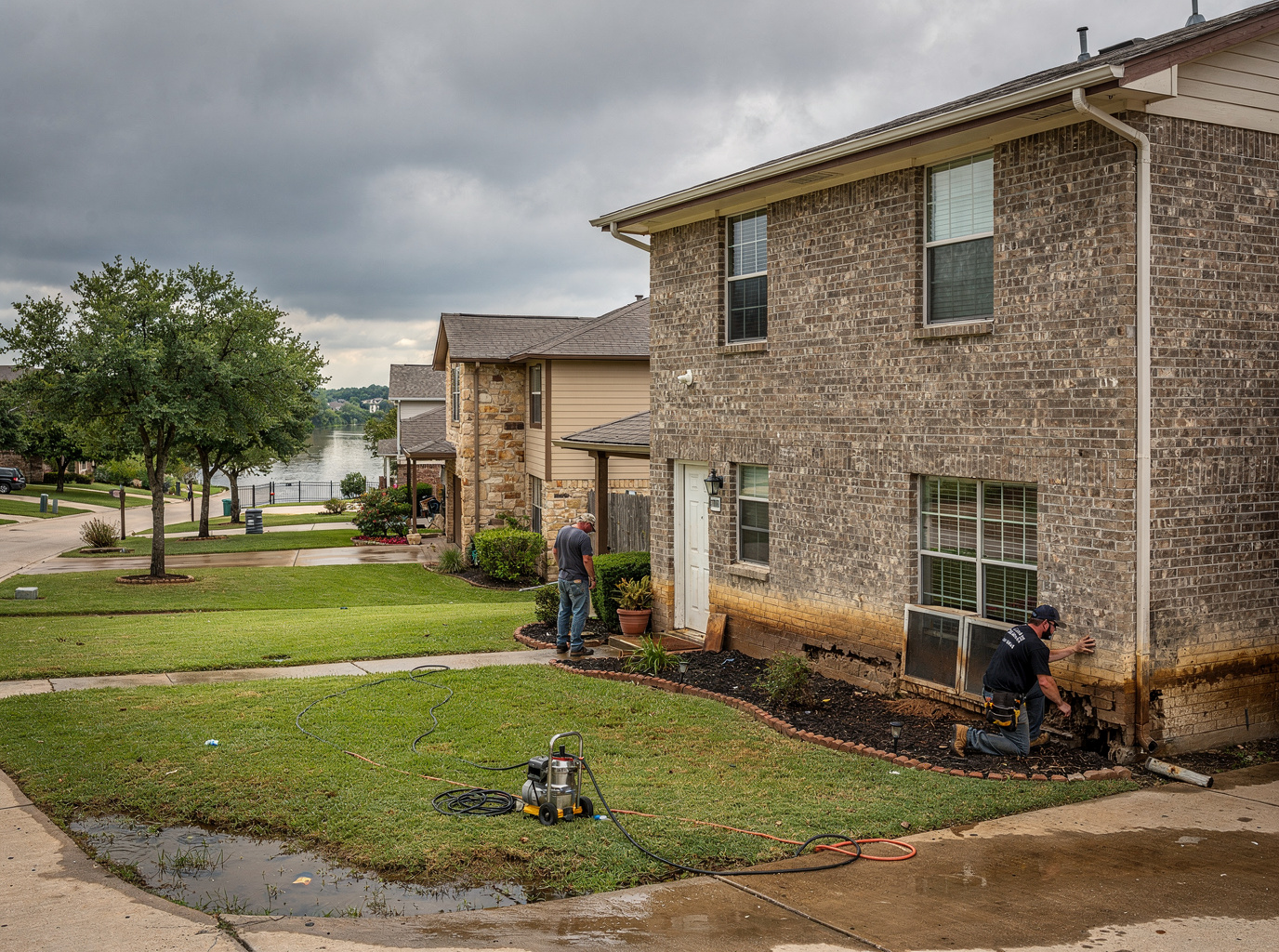
Dallas homes near the Trinity River encounter elevated water damage risks primarily from river overflow during heavy rainfall events, compounded by the area's flat terrain and clay-heavy soils that slow drainage in neighborhoods such as Downtown Dallas, Oak Lawn, and parts of East Dallas.
Trinity River Flood Dynamics in Dallas County
The Trinity River cuts through central Dallas, placing properties in Uptown Dallas and Deep Ellum within reach of backwater flooding when upstream rains swell the channel. Clay soils common along the riverbanks retain moisture longer than sandy substrates farther north, extending saturation periods under slabs and crawl spaces by days or weeks. Homeowners in these zones often see water enter through foundation seams or low-lying vents rather than roof leaks. This pattern requires targeted extraction focused on perimeter drainage rather than uniform drying across the structure. Seasonal peaks align with spring thunderstorms that can raise river stages several feet within hours, pushing water into yards and garages in Lake Highlands and Bishop Arts District fringes.
How Dallas Climate Shapes Drying and Mold Growth
The humid subtropical climate brings hot summers that accelerate surface evaporation yet trap humidity under floors and in wall cavities, while mild winters limit natural freeze-thaw cycles that might otherwise expose hidden leaks. Persistent moisture from river-adjacent properties therefore lingers in older brick and frame homes common near Dealey Plaza and Klyde Warren Park, fostering mold within 48 to 72 hours when indoor relative humidity stays above 60 percent. Technicians adjust dehumidifier placement and airflow direction to counter the river's microclimate, which often runs 5 to 10 degrees cooler and damper than inland blocks. These conditions alter standard drying timelines compared with homes in North Dallas or Lake Highlands that sit on higher ground.
Neighborhood Housing Stock and Water Pathways
Many residences near the Trinity River date to the early-to-mid 20th century, featuring pier-and-beam foundations and plaster walls that absorb and release water differently than modern slab construction farther out in Plano or Arlington. In Oak Lawn and East Dallas, narrow lots and shared drainage lines increase the chance of cross-property seepage during river rises. Concrete foundations in newer Uptown Dallas buildings can hide moisture under tile or hardwood for months, requiring moisture meters and infrared scans to locate. These structural realities mean extraction crews prioritize subfloor access points and often remove baseboards early to prevent hidden rot along the river corridor.
Seasonal Timing and Response Adjustments
Spring rains push the Trinity over banks most frequently, while summer heat demands faster equipment deployment to avoid secondary mold before temperatures climb above 95 degrees. Winter events, though rarer, can combine with freezes that crack pipes in uninsulated river-adjacent homes, sending water across finished floors. Crews serving these zones schedule extra monitoring visits during the first 72 hours post-event because ambient humidity from the river slows evaporation rates. Homeowners benefit from checking sump pump function and grading around foundations each fall before the wetter months arrive.
For detailed guidance on handling flooded basements after local spring rains, see the related article How To Dry Out A Flooded Basement After Dallas Spring Rains. Additional context on pipe repairs following winter freezes appears in What To Expect When Repairing Burst Pipes From Dallas Winter Freezes. When professional water damage restoration becomes necessary, crews familiar with Trinity River microclimates deliver more precise drying plans than generic approaches.