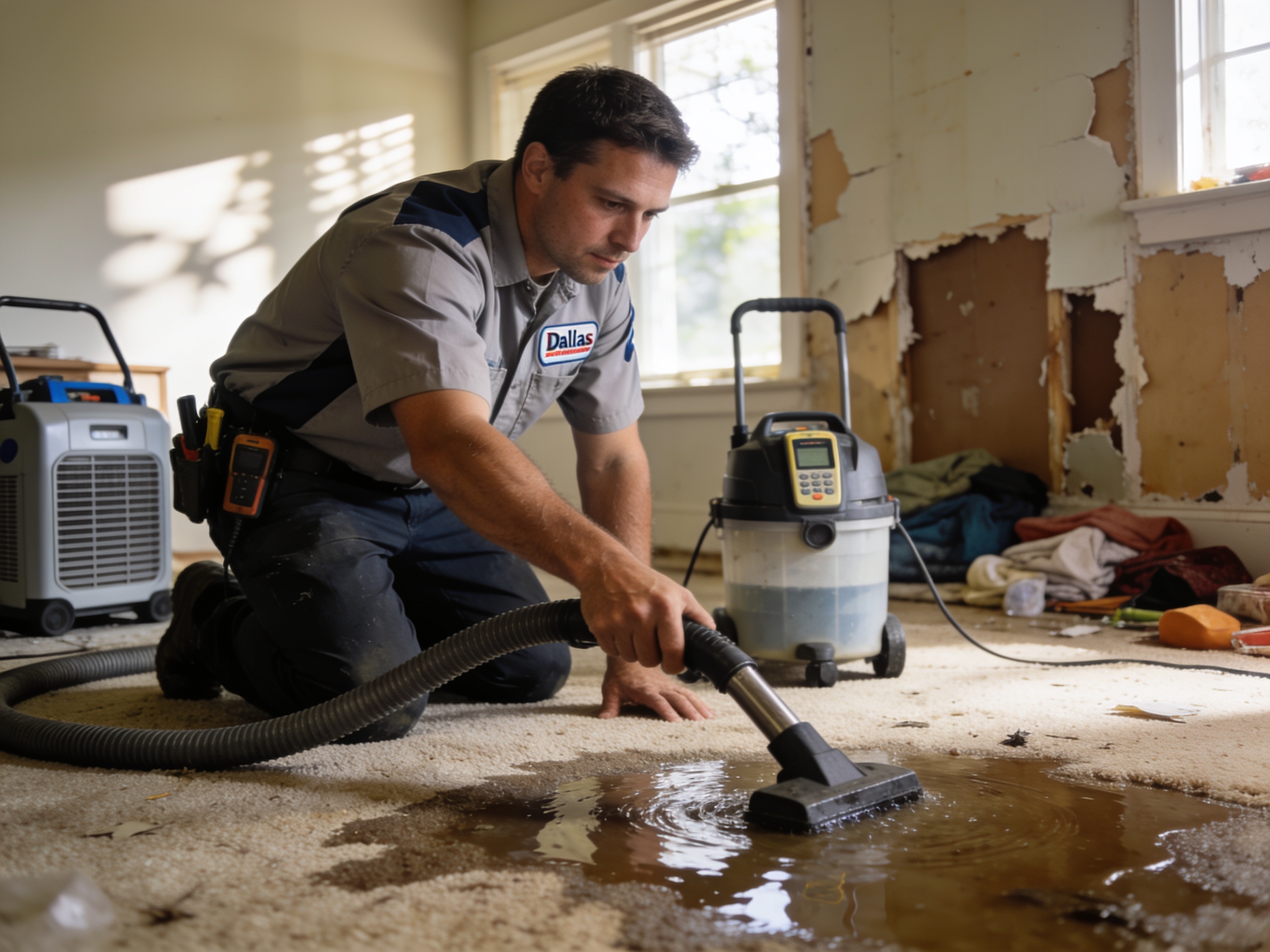
Waxahachie homes often sit on clay-heavy soils that hold water after heavy spring rains, sending seepage into crawl spaces and basements of the older Victorian and Craftsman houses along West Main and Rogers streets. Our crew based at 10000 N Central Expy #454 responds from Dallas and reaches these properties via I-35E before moisture sets into plaster walls or oak floors.
Summer thunderstorms move quickly across Ellis County, dumping water on roofs that have aged through decades of heat. When leaks appear around chimneys or attic vents in neighborhoods west of the courthouse square, we extract standing water the same day and use drying equipment sized for the tight floor plans common here.
Many Waxahachie properties back up to small tributaries of Waxahachie Creek. After prolonged rain, that water can push against foundation walls on lots with limited grading. We focus on removing hidden moisture behind baseboards and under cabinets before mold takes hold in the humid subtropical air.
Around 43. Waxahachie
We regularly work near:
- 📍Ellis County Courthouse
- 📍Getzendaner Memorial Park
- 📍Waxahachie Historic District
- 📍Downtown Waxahachie square
- 📍Waxahachie High School
Water Damage Repair in 43. Waxahachie — Local Notes
- •Clay soils around Waxahachie expand and contract, cracking older foundations and letting water enter slab edges on homes built before 1960.
- •Narrow driveways and mature trees in the historic district limit equipment access, so we often stage drying fans through side doors or windows.
- •Spring rains combined with poor street drainage near the railroad tracks can send runoff into garages and lower-level rooms on the east side of town.
- •Hot summers dry surfaces fast but leave trapped moisture in wall cavities of two-story homes, requiring longer dehumidification runs than newer construction.