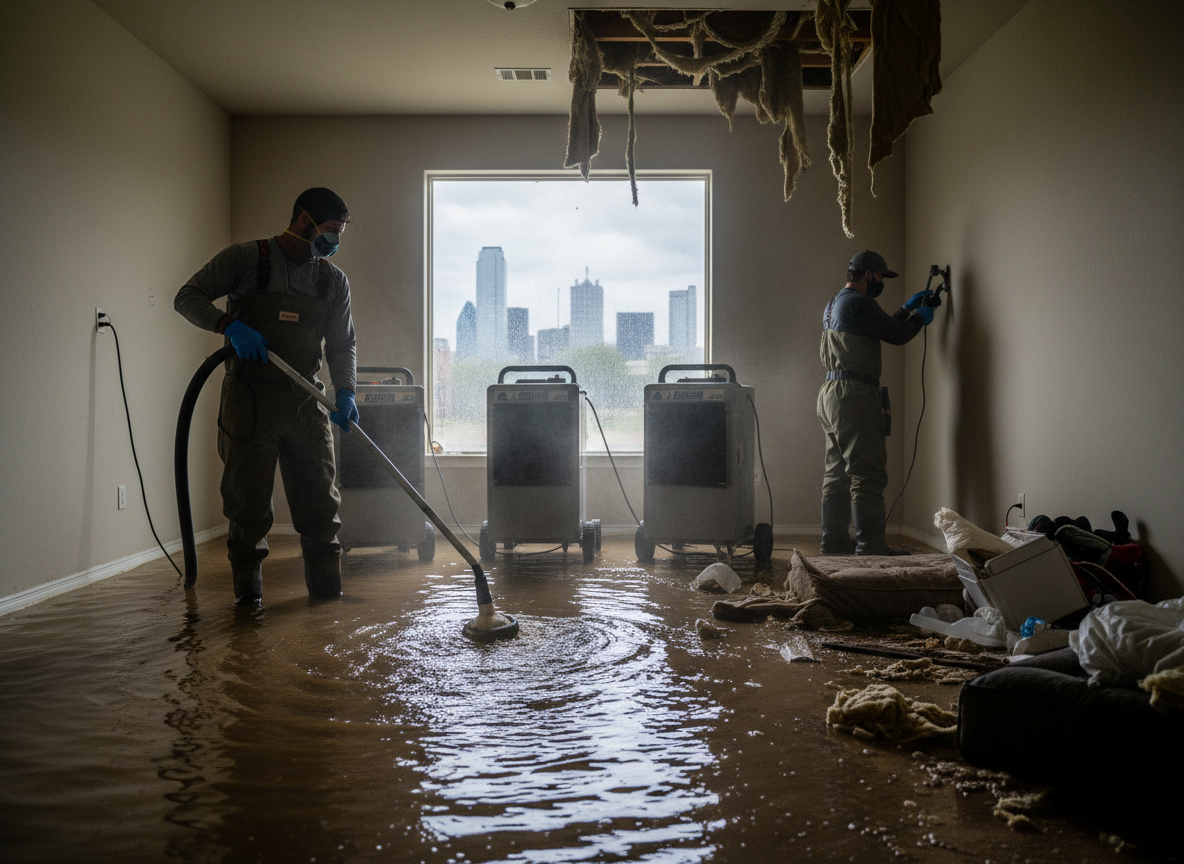
Dallas homes built before the 1980s in East Dallas and Deep Ellum often have plaster walls and slab foundations that trap moisture after a pipe burst or roof leak. The humid subtropical climate means summer humidity above 70 percent can push secondary mold growth within 48 hours if extraction stops short of the subfloor. Technicians pull carpet, cut drywall at 12 to 18 inches above the water line, and run commercial dehumidifiers sized for the square footage rather than relying on box fans.
Flash flooding from heavy spring rains moves water across the flat terrain near the Trinity River and into basements in Oak Lawn and Bishop Arts District. Older cast-iron drains under Uptown buildings crack and allow sewage backflow that requires negative-air machines and antimicrobial rinses before any reconstruction. Jobs in high-rises near Reunion Tower or Klyde Warren Park add elevator scheduling and after-hours noise restrictions that change the timeline.
Winter storms, though mild, still cause supply-line freezes in North Dallas attics where insulation is thin. When the ice melts, water follows joists into multiple rooms. Crews map moisture with thermal cameras rather than pin meters alone because Dallas soil stays clay-heavy and holds humidity that slows drying under slabs.
Coordination with Dallas building inspectors is required when structural members are exposed in historic structures around Dealey Plaza or the Dallas Arboretum area. Documentation includes daily moisture logs and photos so insurance adjusters see the progression from extraction through final dry-down.
Technician insight
In Dallas the thing that catches most people out with Emergency Water Damage Restoration is how quickly the clay-heavy soil and high summer humidity keep sub-slab moisture readings elevated long after the visible water is gone, especially in 1970s homes around Lake Highlands where vapor barriers were never installed.
East Dallas Pipe Burst After Freeze
A supply line in a 1960s East Dallas bungalow froze during a rare winter cold snap and burst when temperatures rose. Water traveled under the slab into two bedrooms. Crews extracted standing water, opened walls, and ran drying equipment for five days until slab moisture stabilized. The home was cleared for drywall repair without mold growth.
Emergency Water Damage Restoration Services We Offer
✓Burst Pipe Water Extraction
Immediate removal of standing water from supply-line failures common in pre-1990 homes across East Dallas and Lake Highlands.
✓Storm and Flood Drying
Dehumidification and air-mover placement after heavy rain events that push water into crawl spaces near the Trinity River corridor.
✓Sewage Backflow Cleanup
Contaminated water removal and sanitization following drain backups in older cast-iron systems found in Uptown and Deep Ellum buildings.
✓Slab Leak Moisture Mapping
Thermal imaging and concrete-core drying for leaks under foundations typical in North Dallas and Arlington properties.
✓Attic and Insulation Restoration
Removal of wet insulation and drying of roof decking after ice-dam or flashing failures in winter.
Emergency Water Damage Restoration Cost in Dallas, TX
| Service | Typical Range | What Affects It |
|---|---|---|
| Initial Water Extraction Visit | $250–$650 | Varies by volume and access in multi-story Uptown buildings. |
| Drying Equipment Per Day | $150–$400 | Number of dehumidifiers needed for Lake Highlands square footage. |
| Category 3 Contaminated Water Job | $1,200–$3,500 | Includes disposal and sanitization for sewage backups. |
| Slab Leak Drying Add-On | $400–$900 | Extra time for concrete moisture removal in older North Dallas slabs. |
Ranges are typical for Dallas, TX and confirmed with an exact written quote before any work starts.
How it works
- 1
Arrival And Safety
Technician reaches the property within the service window, shuts off water if still flowing, and sets containment to protect unaffected rooms.
- 2
Water Removal
Truck-mounted and portable extractors pull standing water from carpet, hardwood, and tile surfaces in Downtown and Oak Lawn homes.
- 3
Moisture Detection
Infrared cameras and moisture meters locate hidden water behind walls and under slabs common in Bishop Arts District properties.
- 4
Drying And Monitoring
Industrial dehumidifiers and air movers run until readings drop below 12 percent, with daily logs delivered to the homeowner.
- 5
Final Clearance
Independent verification confirms dry conditions before any reconstruction begins.
Pricing
Upfront written quotes after inspection, billed by scope and equipment days required.