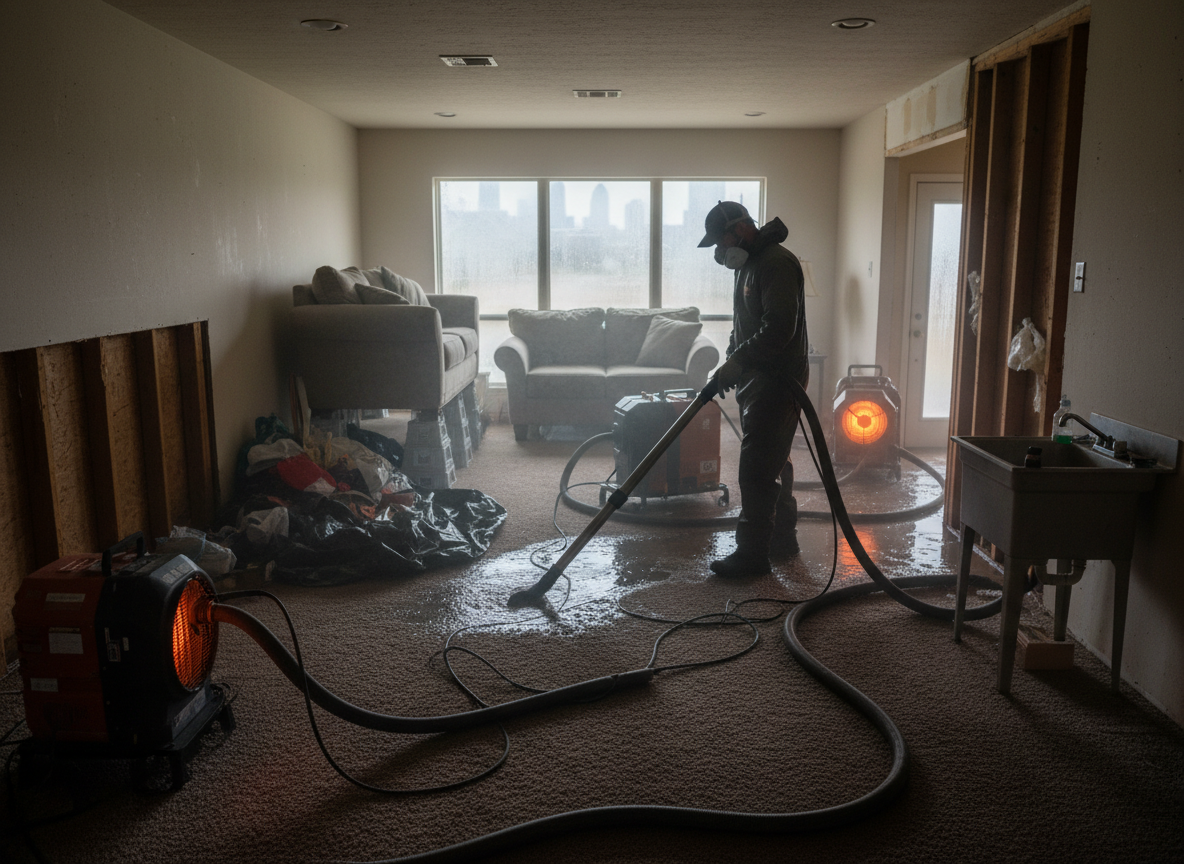
Grand Prairie homes along Belt Line Road and near Joe Pool Lake often face water intrusion from heavy summer storms common in the humid subtropical climate. Slab foundations in 1970s-1990s single-family houses here absorb moisture quickly, leading to hidden damage under flooring that requires targeted extraction and drying. Our team based at 10000 N Central Expy #454 responds directly to these neighborhoods, navigating I-20 access points to reach properties before secondary issues like mold set in during the mild winters.
Drainage patterns around Lynn Creek and older lots in west Grand Prairie create pooling after prolonged rain, especially on properties with limited grading. Water damage restoration here focuses on pulling moisture from wall cavities in brick and frame construction typical to the area. We handle calls from East Dallas commuters and Arlington border residents by staging equipment for fast on-site work without disrupting daily routines in these established blocks.
Around 6. Grand Prairie
We regularly work near:
- 📍Lynn Creek Park
- 📍Joe Pool Lake
- 📍Grand Prairie High School
- 📍The Theatre at Grand Prairie
- 📍Grand Prairie Municipal Airport
Water Damage Repair in 6. Grand Prairie — Local Notes
- •Many Grand Prairie homes built on clay-heavy soil near Joe Pool Lake experience foundation shifts after flooding, requiring careful subfloor inspection during repairs.
- •Access via narrow streets off I-20 means smaller extraction units are used for tight driveways in neighborhoods east of Belt Line Road.
- •Hot summers accelerate mold growth in humid crawlspaces common in 1980s builds, so dehumidification protocols start immediately on arrival.
- •Proximity to the lake increases groundwater seepage risks in low-lying yards during spring rains, changing drying times compared to higher ground in North Dallas.