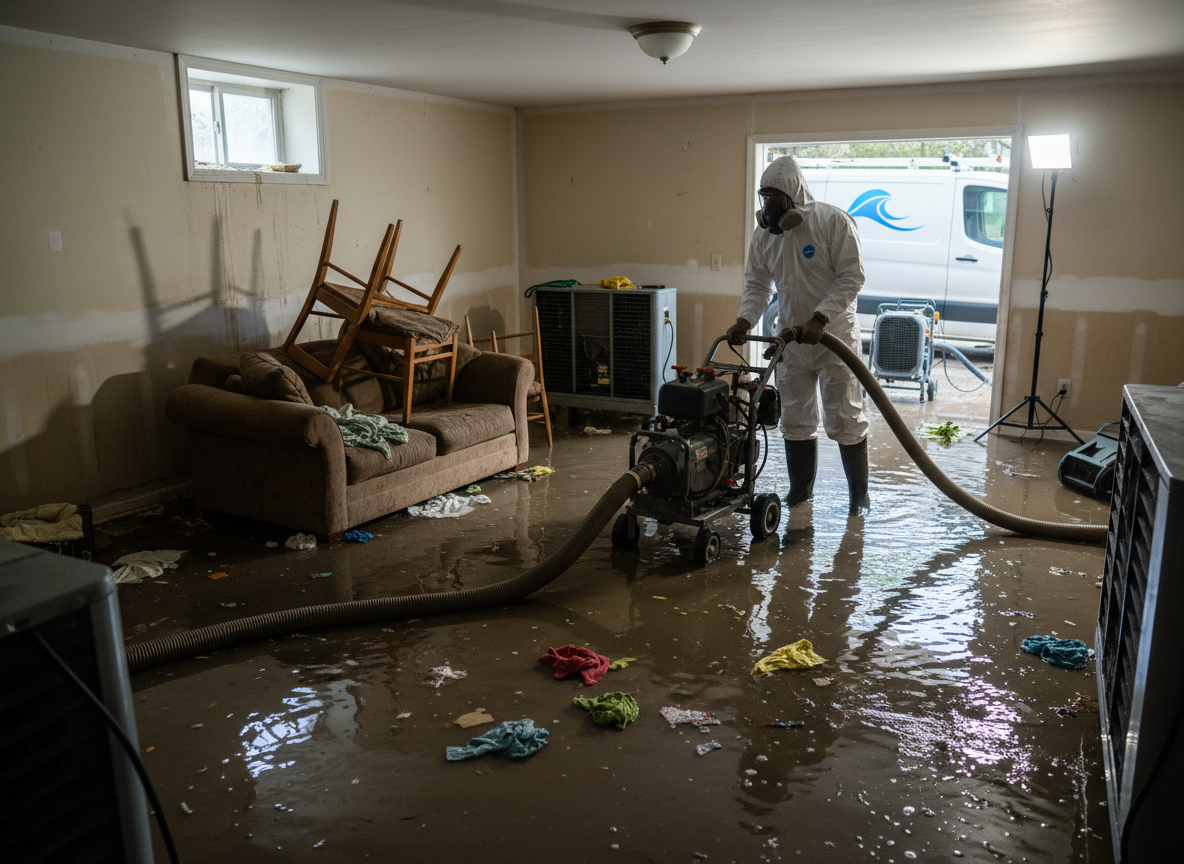
Dallas sits in a humid subtropical climate where hot summers and mild winters combine with sudden heavy rains to create standing water problems inside homes. Older housing stock in neighborhoods like East Dallas and Oak Lawn often features slab foundations and aging plumbing that lets water spread under floors before it is noticed. Extraction crews must account for this by pulling moisture from both visible surfaces and hidden cavities to avoid mold that thrives in the lingering humidity.
Jobs in areas such as Deep Ellum and Bishop Arts District frequently involve mixed-use buildings with concrete and wood subfloors that trap water differently than newer construction in North Dallas. Portable extractors and weighted wands are used to pull water from carpet pads and hardwood without damaging historic finishes common in those blocks. Crews also watch for runoff from nearby streets that can re-enter ground-level units after storms.
When water reaches Lake Highlands or properties near the Dallas Arboretum, soil conditions and slight slopes can push moisture back toward foundations days after the initial event. Technicians mark moisture readings on drywall and baseboards before and after extraction to confirm levels drop below the threshold that supports growth. This step-by-step verification prevents callbacks that occur when only surface water is removed.
Technician insight
In Dallas the thing that catches most people out with Water Extraction Services is how the clay-heavy soil around Lake Highlands and East Dallas keeps pushing moisture back under slabs days after the pumps leave, especially once summer humidity climbs.
Lake Highlands Slab Leak
Water from a slab leak spread under a 1970s home near the Dallas Arboretum. Crews found trapped water migrating toward the garage due to the slight grade. Extraction focused on pulling from under the living room and kitchen before resetting moisture readings.
Water Extraction Services Services We Offer
✓Emergency Water Extraction
Rapid removal of standing water from sudden leaks or storms using truck-mounted pumps sized for Dallas rainfall volumes.
✓Carpet and Pad Extraction
Pulls water from carpet and padding in homes across Uptown Dallas and Oak Lawn before mold sets in from trapped moisture.
✓Hardwood Floor Extraction
Targets water beneath hardwood in older East Dallas properties without lifting boards when possible.
✓Basement Water Removal
Handles seepage in lower levels common in Lake Highlands where clay soil holds moisture against foundations.
✓Sewage Water Extraction
Safely extracts contaminated water from backups in Deep Ellum commercial spaces with proper containment and disposal.
✓Post-Flood Extraction
Clears large volumes after area flooding that affects ground-floor units near Klyde Warren Park and Reunion Tower.
Water Extraction Services Cost in Dallas, TX
| Service | Typical Range | What Affects It |
|---|---|---|
| Residential Water Extraction | $600–$1,800 | Varies with square footage and depth in single-family homes |
| Commercial Extraction | $1,200–$3,500 | Higher for multi-story buildings in Downtown Dallas |
| Carpet and Pad Removal | $300–$900 | Depends on material type and saturation level |
| Basement Extraction | $800–$2,200 | Increases with soil moisture re-entry risk |
Ranges are typical for Dallas, TX and confirmed with an exact written quote before any work starts.
How it works
- 1
Site Assessment
Technicians inspect water depth, affected materials, and access points in the Dallas property.
- 2
Equipment Setup
Pumps, wands, and containment barriers are positioned to protect unaffected areas.
- 3
Water Removal
Standing water is extracted in stages, starting with the deepest sections.
- 4
Moisture Verification
Readings confirm extraction has lowered moisture to safe levels throughout the structure.
Pricing
Cost depends on water volume, access, and whether hidden cavities require extra time.